Friday, October 16, 2020

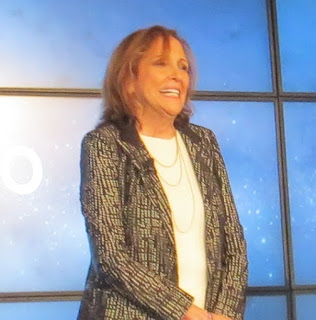
National Geographic Editor-in-Chief Susan Goldberg on Breaking the News: What's Real, What's Not, and Why the Difference Matters

In this interview, Susan Goldberg talks to Alexander “The Engineer” Lim, host of AuthorStory by alvinwriter.com, about the National Geographic Children's book, Breaking The News: What’s Real, What’s Not, and Why the Difference Matters.


“We tell stories every day that can help make the world a better place.” ~Susan Goldberg

When she wrote an essay on journalism in the 8th grade, all Susan wanted to be was a great reporter. She is very thankful for all the opportunities she had in the past forty years, remarking that she came on “the scene of societal change,” as she received opportunities that women before her didn’t get.

“Journalists are the eyes and the ears of the public,” Susan says about what journalists are, writing out stories on subjects and places that the general public has no access to. “I think it’s one of the most important functions of our democracy,” she adds, as this enables people to become informed consumers. Where stories are concerned, Susan notes that the best reporters have “a million and one ideas,” and that reporters work with editors to prioritize what stories are more important.

Where her experiences as a female journalist are concerned, Susan notes that journalism was very much a man’s world when she started in the 1980s. “I didn’t see very many female editors,” she notes about the journalistic environment at that time. She remarks that journalism is still very much male dominated and that, despite “great strides” being made in the end of the 20th century, the momentum for female advancement in journalism has stalled out at the moment. Where leadership is concerned, she hopes that her style is collaborative, and she works to give “a hand up” to the next generation of journalists, coaching them and speaking with them on how to advance in their profession. She also adds that it is a journalist’s role to “shine a light in dark places” to bring forth that which otherwise would remain hidden, and that this is one of the things that makes her proud to be a journalist.

The term “fake news,” Susan points out, is a term used by the present and 45th President of the United States for news items that he doesn’t agree with. What is presently included under the blanket term of “fake news,” Susan notes, was called, in previous years, consisted of such things as hoaxes, conspiracy theories and propaganda - stories that appear factual, but which can be outright lies. She remarks that, in the past, news came from a limited number of channels, so people knew where the stories came from. 

At present, people are bombarded with information 24/7, thanks to social media and the Internet, and the sources are legion. Thanks to social media, information can be quickly spread, “almost like a game of ‘Telephone,’” though the story spread might not be a real one. Susan notes that people nowadays need to pause and make sure that they pass along real stories, rather than fake ones.

People “need to be curious and be skeptical consumers,” Susan remarks, adding the journalistic truism: “If your mother says she loves you, check it out,” adding that this truism underscores the need for people to be sure where information is coming from and if that information is real. She also notes that a third of young people admit that they have passed on stories that turned out not to be true, noting that bad information not only misleads but can also do harm. Susan also notes that half of the information that young people receive nowadays comes from social media and the Internet, which makes their being smart and skeptical consumers vital, where discerning the difference between real and false information is concerned.

Author Robin Terry Brown had been writing books for kids for over twenty years. She is likewise a journalist who had assembled a panel of journalists from various news organizations, as well as journalism professors, to talk about the history of news and journalism, the kind of stories that people read, and how to evaluate whether a story is real or false (which includes such things as how to tell if pictures are doctored).

Susan notes that some of the stories printed by National Geographic can take years to finish, and that, while these stories can be as long as books, the process of investigating and writing a story in that magazine is different from the process of writing a book. What is important, Susan emphasizes, is the discipline necessary to present truthful and accurate information which has been ethically gathered.

“I don’t think any one of us want to believe things that aren’t true,” Susan remarks, adding that it is hard for one to behave if one doesn’t know the basic facts. Lies, she also adds, can spread far more quickly than truth and the facts can, particularly in the Internet age. She also notes that it is just as easy to figure out what is real and what is not, as checking on stories is likewise just as quick on the Internet. One good way of checking on whether big and outrageous stories are real or not is to check if other people are covering said story, she explains, as a lot of people, particularly in the established media outlets, will be covering the same story.

Breaking The News is a fun and easy read, Susan remarks, be the reader an adolescent or an adult. The journalist’s code of ethics is included in the book, and this includes making sure that one is meeting with an expert on the field, and being transparent with one’s mistakes whenever these occur. There are several examples of falsified information in the book, and one of the best ways to determine if the information is false is if a headline that one reads makes one emotional, so that one doesn’t go into the story itself to see if the story is real or not. The book includes a “Truth Toolkit,” and one of these tools, Susan shares, is for determining if the story feels like it belongs “on a supermarket tabloid,” (all caps, lots of exclamation points, includes aliens, etc.), while another aims to determine if the story is full of typos (spelling mistakes, grammatical errors, sloppy and messy, bad punctuation), as no legitimate news site puts out news in that condition. Yet another is if the website that the news comes from is a website of a legitimate news organization.

Susan admits that the book makes her proud to be a journalist, as it explains what journalists can do and the impact of what good journalism can do. It is a very excellent material for those who are studying journalism and for those who dream of becoming one in the future.

Purchase from Amazon: 

Breaking The News: What’s Real, What’s Not, and Why the Difference Matters by author Robin Terry Brown (with Mary Newton Bruder & Jamie Terranova) and published by National Geographic Children's Books with Editor-in-Chief Susan Goldberg


Friday, October 9, 2020

Kwame Mbalia and How Tristan Strong Destroys the World in Book 2 of the Tristan Strong Novel Series

In this interview, Kwame Mbalia talks to Alexander “The Engineer” Lim, host of AuthorStory by alvinwriter.com, about his book, Tristan Strong Destroys the World (A Tristan Strong Novel, Book 2).


“The very first gatekeeper of one’s work that one would meet will be oneself.” ~Kwame Mbalia

Kwame had always written stories as a child, as these were the best way he would express himself. He joined an online writer’s group some years back, and the group members then encouraged him to become an author.

Kwame, who is from Wisconsin, was named after the first president of Ghana, and his name also means “born on Saturday,” which was the day he was born in. He was steeped in west African mythology as a child, as he heard stories about these, and as a writer he wanted to create stories which were based on this mythology, to pass on to others. The Tristan Strong stories are, for him, about storytelling and how these get carried on for others to listen to.

Where the mythological characters are concerned, Kwame notes that the traditional tales leave gaps where authors like himself can create other stories, to expand on these, so that a larger representation of the characters can be given. “These stories have been around for a long, long time,” he remarks, adding that he includes them in his books to pay homage to the traditions around them.

Kwame remarks that each of his books is centered around a theme, with the theme of the first book, Tristan Strong Punches a Hole in the Sky, being that of grief, both for the lead character and the world he finds himself in. 

The themes he writes about in Tristan Strong Destroys the World are trauma and diaspora, and these are interrelated with what the characters and real-world people deal with. Kwame remarks that readers can get an idea of how one person, at least, handles concerns such as grief.

Where the consistency of his books is concerned, Kwame remarks that there is a large team of editors which makes sure his stories remain consistent over time and, in addition, Kwame also re-reads what he wrote to ensure consistency. He notes that food is one of his favorite things to write about, noting that: “Food is a wonderful way of world-building,” as it shows different aspects about the culture that prepared it. He also enjoys writing dialogue, particularly humor, as this shows the degree of friendship and camaraderie amongst the characters.

Where Tristan Strong is concerned, Kwame notes that the character “grew organically,” and that he thought a lot about how a teenager Tristan’s age would deal with issues like grief and trauma. In the second book, Kwame explores what happens after the hero defeats villains, and Tristan’s dealing with this is what makes him grow. Where Gum Baby is concerned, even Kwame himself wonders how Gum Baby has become the character she presently is, noting that: “She’s taken on a life of her own.” That said, Gum Baby acts as a foil to the introspective, thoughtful Tristan, as she’s confident, loud and boisterous. That said, Kwame does create a framework of the story, so he knows where the story is going, and the characters grow within the framework he establishes. The new characters that Tristan Strong Destroys the World introduces, Kwame notes, are interesting ones which add to the growing story, particularly Tristan’s relationship with Junior.

Kwame remarks that would-be authors will encounter gatekeepers - people who can reject and prevent one’s work from seeing the light - along the way, but the very first gatekeeper one would meet will be oneself.

Purchase from Amazon: 

Tristan Strong Destroys the World (A Tristan Strong Novel, Book 2) by Kwame Mbalia


Saturday, October 3, 2020

Brian Deer: The Doctor Who Fooled the World: Science, Deception and the War on Vaccines

In this interview, Brian Deer talks to Alexander “The Engineer” Lim, host of AuthorStory by alvinwriter.com, about his book, The Doctor Who Fooled the World: Science, Deception and the War on Vaccines.


“The science needs to be separated from the politics.” ~Brian Deer


Brian has investigated three vaccines to date: a diphtheria test which caused controversy in the 1970s and 1980s, which took a year; AIDSVax, which was a failed AIDS vaccine; and the MMR (measles, mumps, rubella) vaccine, with the latter being the basis for the anti-vaxxer controversy which is presently sweeping the world. He also investigated oral contraceptive fraud in Australia in the 1980s and also investigated other drugs. The Doctor Who Fooled the World is a different kind of investigation, as the focus of this book is on an individual who essentially kicked off the anti-vaxxer movement, rather than a drug itself.

Brian never did think that he would eventually get the time to become an investigative reporter. “It’s extremely hard work,” he notes, “especially if you’re working in a field like science,” adding that he needs to understand, as much as possible, what is being talked about. Investigative reporting, he points out, is different from standard science journalism, which is essentially advertising for new scientific ideas, machines and concepts. Investigative journalism is presently facing challenges, as the money that would have gone into it from advertising is now being funneled to online platforms such as Google. Brian adds that it took him four months of research before he wrote out a story, and additional challenges come in the form of cultivating contacts and obtaining documents to support his story. This is because investigative journalism entails making public something which someone doesn’t want made public, and as that person could very well wind up suing an investigative journalist, it behooves the latter to have all of his documentation supporting his claims, to support his case. Brian notes that he has already been sued twice by the personality in the middle of The Doctor Who Fooled the World and is hearing rumors of a third suit against him by that same person. Brian also adds that research for his book took two years, as all of what he wrote had to be evidenced, which meant that he had to create an index of thousands of .pdf files for fact checking.

Brian remarks that he’s not an advocate for vaccination, and that his purpose is to question the knowledge available. While he isn’t a medical professional, he notes that the basics of vaccination is essentially that a weakened version of an infectious agent is injected into the body, so that the body’s immune system can overcome that infectious agent - such as a virus - when the full-strength thing hits. He notes that vaccinations have been successful against such diseases as diphtheria and polio, which used to be prevalent and worrying for parents in the past, but which are not presently large concerns for parents today.

Where Andrew Wakefield is concerned, Brian remarks that he was a research academic at a London medical school who, in 1998, published a paper in The Lancet, a peer-reviewed medical journal, on a five-page, 4,000-word study, conducted on twelve children, which indicated that, in two-thirds of those cases, their child had been developing normally but then began exhibiting autism within two weeks of receiving an MMR vaccination shot. Wakefield then claimed to find a link between taking the vaccine and autism, and then had the government suspend the vaccine. Brian noted that, even in medical studies, twelve children is a small sample, but that there was a possibility that the doctors at the hospital had come upon something that others had missed.

Brian originally didn’t want to get involved in “another vaccine investigation,” given all the various fields and disciplines that were involved, but he got involved again when, in 2003, he was assigned to look into the matter, as outbreaks of diseases which hadn’t been seen in years were taking place. (By then, Wakefield was exporting the parents’ fear of their children taking vaccines to the United States, according to him.) After talking with the parents involved, however, Brian said he discovered that the children involved in the study weren’t the kind of statistically random participants that scientific studies should be based on. This meant for him that the parents were far more likely to complain about the effects of a vaccination than the average, randomly determined parent. Brian then came upon other aspects of the study and Wakefield’s subsequent actions which led to Wakefield being essentially tried by the British medical board for over 200 days.

Brian points to outbreaks of measles which took place in 2019 as being due to the lack of vaccination. He also remarks that he was in an area where children died from measles because they hadn’t been vaccinated. Brain also points out that autism isn’t caused by taking a vaccine, and notes that an “adult” debate - one free of personal bias - still needs to be conducted on the pros and cons of vaccination, with both sides need to be taken into account, particularly with fast-tracked vaccines like those being developed for the Covid-19 virus.

Purchase from Amazon: 

The Doctor Who Fooled the World: Science, Deception and the War on Vaccines by Brian Deer


Thursday, September 24, 2020

Ann Druyan on COSMOS: Possible Worlds & Her Hope for the Future

In this interview, Ann Druyan talks to Alexander “The Engineer” Lim, host of AuthorStory by alvinwriter.com, about her book and the associated TV series, Cosmos: Possible Worlds.


“It matters what’s true. Nature will not be deceived.” ~Ann Druyan

Ann had wanted to be a writer since childhood, with her parents introducing her to literature. Her interest in science was piqued by her exposure to pre-Socratic philosophers, who said that such observable phenomena as lightning and thunder is not because the gods were angry, but due rather to a rational, physical cause. Ann’s real push into science came when she met Carl Sagan, whom she regards as a great teacher, giving her a “20-year tutorial” on scientific matters.

Ann became the creative director of the Voyager 1 and Voyager 2 Golden Records because of her connection with Carl Sagan, who didn’t have the biases that were common in the 1970s, such as the great amount of sexism in scientific circles. Carl asked Ann to become the creative director of the project, which she took on willingly, calling it the intersection of science, culture and society. (The Golden Records have a projected shelf life of five billion years, and as of this interview, both probes might be outside the realm of the solar wind, but they are not yet in the region of the Oort cloud, which is recognized as the boundaries of the sun’s gravitational influence.) The records are designed to run at 16⅔ rpm, and a great deal of debate, within the team involved what and what not to include. The records also represent an inclusion of cultures all over the world, which Ann remarks as being the beginning of “world music.”

Cosmos: A Personal Voyage was the first time Ann and her co-writers did anything like writing a TV series, and she admits that it was like “jumping off the deep end.” She remarks that everyone went along with what their instincts and brains told them to do, and that the information in the TV series was, just like science, designed to be accessible to the common person. Ann noted that large, expensive scientific projects were paid for by taxpayers, and that the insights and discoveries made needed to be made accessible to the ordinary person. Ann also remarked that Carl Sagan would do such things as go to naturalization ceremonies and go to schools to encourage people with their work and their lives, as part of his own belief in the common person.

Ann and Carl were driven to write the novel Contact in part in reaction to the sexism prevalent among the scientists of the 1970s, wanting to create an odyssey where a woman goes on the journey. Another aspect was Carl’s irritation with the average science fiction movie, as these were greatly ignorant of scientific and physical reality. “For him, great art had to have some truth,” Ann remarks, and this was why the science was right in Contact.“ She also adds that, to this day, female scientists get in touch with her, telling her that Contact was a big inspiration for them getting into science.

Where the present trend of private companies being involved in space exploration is concerned, Ann believes that having “the super-rich” lead the way to the stars is “a step back.” She notes that, while she was in conflict with a lot of the policies of the American government at the time she was involved with the Voyager missions, she could look back with pride at the work she had done. Having private companies lead exploration, in her opinion, is essentially a return “to the 18th century,” as the motives for private-company exploration would be different from those funded by a government.

Ann remarks that Cosmos: Possible Worlds is a vision of what is attainable, should we humans “get our act together.” As a way to set the argument for that possible future, Ann wanted to include life stories that lay the foundation for that such future. She remarks that a lot of views on the future are pessimistic, and that telling the stories of people (such as Russian botanist Nikolai Vavilov) who are not as well known as such scientific luminaries as Galileo, yet who have had an impact on human understanding, who persevered through some very dramatic times in their lives, is important to creating the vision for the future she noted. “These are heroes who have never committed an act of violence,” Ann notes, “but they are willing to put their lives on the line so that we, people who live in the future, could understand nature better and be better equipped to flourish.” Giving these people their due is one of Ann’s objectives, remarking that: “Science offers redemptive powers to us, that we have hardly used, that can undo seemingly intractable problems.” Ann notes that truth-telling, as well as scientists, have “taken a beating” under the present political environment, and that, after reading the book, a reader will be scientifically literate and thus able to tell when they are being deceived. 

“It is the intention to entertain and to excite the audience,” Ann adds about the entire Cosmos series, adding that 987 people, in total, worked on the Cosmos: Possible Worlds series over the past three years to bring it to reality. “It was a joy to work with all of them,” she enthuses. “If I don’t understand it,” Ann adds, where translating scientific principles to make these understandable to the average person are concerned, “then I can assume that people who are just like me will not, either,” adding that she prides herself on finding stories that move, inspire and enlighten.

Ann has also been involved, at a high level, in such activities as serving as a program director for the first solar sail deep space mission, providing pediatric care for disadvantaged children, and preserving the environment. Doing so, she remarks, is easy because: “When you love what you do, and what you do is meaningful, it gives you so much energy and appetite for more work.” Ann adds that she is also “lucky,” in that she has worked on those things that she believes in, also remarking that she has helped “tear down the walls” between science and the average person, noting that a democratic society entailed having people who are involved and aware.


Purchase from Amazon: 
COSMOS: Possible Worlds by Ann Druyan 


Sunday, September 20, 2020

J.C. Cervantes: The Shadow Crosser - Book 3 of the Storm Runner Fantasy Series

In this interview, J. C. Cervantes talks to Alexander “The Engineer” Lim, host of AuthorStory by alvinwriter.com, about her book, The Shadow Crosser, book 3 of the Storm Runner Series.


“Read widely.” ~J. C. Cervantes

J.C. never did really think specifically about becoming an author, and the seed of this began when she wrote out a story for her youngest daughter. From then, she expanded on the story, and after several pages of writing, she realized that she seemed to be writing a book. She has been “heavily influenced” by such authors as C.S. Lewis and Sharon Creed, as well as by poets such as Mary Oliver. She admits that some of the books she read has had a strong influence on the language she uses when she writes. 

The Storm Runner trilogy centers around a 13-year-old boy named Zane Obispo who, while being homeschooled, finds that he is destined to release the Mayan god of Death, who just happens to be imprisoned in the volcano in Zane’s back yard. Zane is an intelligent young man who longs to have friends, and over the course of the books he learns about loyalty, courage, friendship and family are all about. Another character, Brooks, has her own concerns, as she is a shapeshifter who can only shapeshift into a hawk, whereas other shapeshifters can change into just about any shape they want.

J.C. used Mayan mythology because she had been immersed, since childhood, in Mesoamerican mythologies, as her grandmother told her stories of these. She became fascinated with such mythologies from such exposure, and learned during high school that there was just about nothing to be found on these, when she attempted to read more about these. J.C. notes that creating a “continuous narrative” for such mythologies is difficult, due to the Spanish suppressing (and destroying) records of these, so what is presently known came from the work of archaeologists who investigated the Mesoamerican cultures. She notes that a lot of books about these cultures are essentially biased, as the information that is written down is filtered through the author’s own cultural and personal biases. J.C. was surprised to discover the ideas of gender fluidity, as the gods concerned changed genders as needed, and that the Mayans were advanced for their time, when it came to mathematics, their language system and astronomical systems were. She notes that nobody today knows anything about the original myths and histories, as the only things left to base our knowledge on are essentially four incomplete codices. (Mayan glyphs related to numbers and astronomy had been decoded as early as the late 19th and early 20th centuries, but translating these glyphs only well and truly began in the 1970s.) J.C. also remarks that a lot of the ancient cultures which weren’t in contact with each other had such commonalities as gods of war, of the sea, of death and of the sky, which indicates that we, as humans, are wired to understand our origins through storytelling and mythology.

Where storytelling is concerned, J.C. wants her characters to grow organically, to the point of saying things that surprise her; and she admits she wants to be surprised, as this keeps her from “being bored.” That said, the characters stay to the core of what they are, such as consistently liking chocolate. Where structure is concerned, J.C. has learned to outline, as she tended to write herself into corners. She always starts off with the opening and ending scenes and then filling out the middle, which include four “pinch points.” J.C. admits that writing out action scenes are the most challenging for her, due to the need to write about physical movement in detail. Conversely, it’s creating the settings that are the easiest for her, to the point that she needs to “hold back.”

Irvin Rodriguez does the artwork for the trilogy, and J.C. admits that the illustrations capture the essence of each book. An entire team actually works on each book, and the illustrator and editors are the ones who work together. The editor works closely with J.C. for the initial “sketches” for the story, and the details are filled out as the book is written out.

For would-be writers, J.C. notes that people read books in their own, individual way. She notes that she makes plot outlines for the books that interest her, and goes into details about the scenes she likes, as doing so enables her to somewhat imitate what they did until she can do it using her own style. She also recommends that would-be writers need to be widely read. “Read romance if you want to learn about character development,” she suggests. “Read fantasy if you want world building. Read action adventure to learn about pacing.”

J.C. is presently working on a quadrilogy as well as a romantic comedy.

Purchase from Amazon: 


Monday, September 14, 2020

Carolyn Wilman on Helene Hadsell's Books and the Secrets of Attracting Luck in Life

In this interview, Carolyn Wilman talks to Alexander “The Engineer” Lim, host of AuthorStory by alvinwriter.com, about her editing and publishing Helene Hadsell’s books, The Name It & Claim It Game: WINeuvers for WISHcraft and In Contact With Other Realms: An Adventurer's Experiences in Awareness.


“There is no failure, only a delay in results.” ~Helene Hadsell

“Always listen to your inner voice, even if it seems illogical.” ~Carolyn Wilman

Carolyn feels honored to be publishing Helene’s works, as Helene spoke to her through these. Carolyn notes that Helene was friends with such people as Jose Silva and Dr. Joseph Murphy, doing a lot of things in the seventies which people are now doing, such as health and visualization methods. Helene was a housewife who didn’t work outside the home until her spiritual guides pushed her to attend seminars by Jose Silva, ending up, in the end, as his assistant and PR person, performing such duties as arranging trips to different cities. It was through this experience that Helene learned how to envision what she wanted and then get it. 
Carolyn had met Helene Hadsell for four days in 2008, and the latter then told her to teach Helene’s classes, as Carolyn was apparently the one best suited to do so. Carolyn, however, didn’t do anything about it until 2019, when Carolyn got in touch with Helene’s son, Dike (Helene had passed away in 2010). Carolyn then told him that his mother’s messages needed to be passed on, as these would be lost once Dike, himself, passed on (Dike is now in his seventies), and Dike agreed, which is why Carolyn is now publishing all four of Helene’s books. The Name It and Claim It Game is the first of these, while Contact with Other Realms is the second, and Carolyn has modernized it as well as included some of the notes that Helene had kept on adding to these until the day she died.

Carolyn remarked that she had used what she had learned from Helene to win prizes on her own, and noticed that, when she was depressed from a divorce, she didn’t win prizes. This is due, she believes, to her needing to be in an energized, happy state to do so. Carolyn notes that she and Helene seemed to resonate with each other, particularly since Helene used levity all throughout her life.

Carolyn remarks that Helene won a lot of the contests she entered, thanks to the mindset she had. Helene’s mindset was that of: “You’ll see it when you believe it,” and Carolyn mentioned a story of a woman who didn’t see herself winning, as well as another story of Helene wanting something very specific, which she then got. That said, Helene was into other things, such as overcoming her fear using the techniques she had learned. She was also in the New Thought Movement which, today, is called New Age / Positive Thinking, and while Helene wasn’t the only person involved with this, Carolyn remarks that so many different people are necessary because different teachers resonate with different people.

Carolyn notes that Contact with Other Realms is the book that Helene (and her spirit guides) really wanted to write, as she could talk to spirit guides, but she wrote The Name It and Claim It Game to get people used to the idea of using their mind - visualization - to get things; and what more better way to make people more open to changing their thoughts and using their intuition, than by showing how to win prizes in contests? That said, Carolyn says that one needs to attract love to win prizes, which is aligned with her needing to be in a higher state of vibration to win things.

Carolyn mentioned how Helene watched her grandfather’s passing at a young age as an example of how she could see into the spiritual realm, which is the first story in Contact with Other Realms. Helene also refers to her spiritual contacts as “guides” rather than angels, and wanted to impart that everyone can communicate with spiritual guides; and Carolyn remarks that she does this, herself.

Purchase from Amazon: 

and 


Amra Sabic-El-Rayess on Her Story of Love, War, and Survival

In this interview, Amra Sabic-El-Rayess talks to Alexander “The Engineer” Lim, host of AuthorStory by alvinwriter.com, about her book, The Cat I Never Named: A Story of Love, War, and Survival.


“My hope is that, if every reader can connect with elements of who I was and what I had experienced, we can connect with each other on a basic, human level.” ~Amra Sabic-El-Rayess

Amra is a Muslim who grew up in Bihac, and she was discriminated against for her religious beliefs. This discrimination came into full play when the genocidal Bosnian War of 1992 - 1995 broke out, a war which pitted the Serbs (who followed the Orthodox religion) against the Bosniaks (who were Muslim) and, eventually, the Croats (who were Catholics). She experienced a four-year military siege, where she and her family lived without electricity and experienced part of her house being blown up by a bomb and the loss of several of her friends. That said, she was raised in a loving family, and it was that love which enabled her and her family members to survive the war. These kinds of relationship, Amra points out, hold just as true in the Covid-19 pandemic (which was when this interview was conducted) and given the present state of racism and social unrest in the United States.

Amra remarks that some of the memories she remembers intensely is the feeling of pain and seeing blood and bodies on the pavement. She also remembers the news of school opening again (she was then a teenager), but as the Serbs targeted schools for attacks with the intent of killing everyone there, attending school meant literally risking one’s life. Some of Amra’s friends had been killed during this time, and these teenagers were normal teenagers, with some being math nerds and who had crushes on others. Amra also notes that rape was a tool of war, and she, herself, almost became a victim when, in desperation, she and her mother crossed enemy lines in an attempt to buy food from her enemies so they could live. That said, Amra muses that one never recovers from such experiences, with these changing the way one lives and views the world. She remarks that surviving this genocide was a “mental toll,” but also made her more empathic and sensitive about others.

An important aspect of her life during that was was the unconditional kind of love she experienced with Maci (which is Serbian for “cat”), which was a contrast from what she was experiencing from other humans at the time. Maci came to Amra as a refugee cat, and Amra originally didn’t like to look after her, as Amra had been attacked by a German Shepherd while still a child. Maci followed Amra and her father home and stayed throughout that conflict, becoming “a light” in Amra’s life. Maci, according to Amra, was intelligent, bright, patient and polite, and likely had another family to whom something had happened, and it was because Amra interacted with Maci kindly that Maci hung around, quickly adapting to Amra’s family.

Amra mentioned that she became aware of how special Maci was when, on June 12, 1992, she, her family and several others were packed into a basement of another family to evade a Serbian attack (likely shelling). Amra and her brother snuck out to go to their house during a lull in the attack, unaware at that time that the Serbs would deliberately stop shelling to allow people to leave their shelters and go out so that they would restart shelling and catch a lot of people out in the open, thereby killing a lot of them. Amra and her brother encountered four of their friends outside their house, and while talking to them, the pair heard Maci somewhere. Amra and her brother then start looking for Maci, and at that moment a shell landed and blew up, killing their four friends. Another was when Amra and her family needed to escape the city to a farm of her uncle and aunt - a place that Maci had never been to - taking Maci with them. The family then needed to leave quickly and were unable to find Maci at the time; but some time after they returned home, Maci showed up, after having crossed hills and some possible minefields. And during her stay, Maci did such things as offer the birds and mice she caught to the family.

Amra is a self-admitted math and physics nerd and appreciates the value of education, particularly given the discrimination that she had experienced. She also wrote poetry during the war, with her poems being blown up during the war, and she would tell stories to her students to help make things more memorable to her students, once she was in the academe in the United States. She hesitated writing a book on her experiences because of all the traumatic memories she knew she would remember, and it was after her younger daughter asked her, given the present situation in the United States, what would happen to her and her older sister in case Amra and her husband were rounded up and taken away. “That was a question I never wanted to hear from my child,” Amra noted, adding that, if young adults ask such questions, society is on a negative tangent, and hopes that writing her memoir would evoke empathy and understanding from those who read it.

Amra remarks that she has been “pleasantly surprised” by how her book has been received by both critics and regular readers, and the praise that she had received because of it. That said, she has also received threatening e-mails and messages on social media from racists who only know that she is Muslim, because she is using her voice to tell her story.

Purchase from Amazon: