Showing posts with label Sex. Show all posts

Thursday, July 12, 2018

Erica Garza & Her True Story of Getting Off from Sex and Porn Addiction

In this interview, Erica Garza talks to Alexander “The Engineer” Lim, host of AuthorStory by alvinwriter.com, about her book, Getting Off: One Woman's Journey Through Sex and Porn Addiction.

PLAY THE VIDEO AND LISTEN TO THE INTERVIEW WITH ERICA HERSELF.

“Shame was the driving force in the way my addiction manifested.” ~Erica Garza

Erica decided to write Getting Off for several reasons, one of which was her using writing as a way to deal with difficult emotions and gain perspective on her life. It was because of this that she felt most at home with the Hoffman process (which is a seven-day retreat where writing is one of the methods involved) to help her come to terms with her own sexual addiction, and the seed of the book was an essay she wrote on the topic. Writing the essay was challenging for her, and after she posted it online, she received a lot of emails from people who felt isolated, alone and ashamed with their own sexual addictions. The responses encouraged her to write more and the result was book she eventually authored.

Erica grew up in a Catholic environment, and her family environment was one of love and support. She began the road to sex addiction when, at the age of twelve, she was diagnosed with scoliosis and needed to wear a back brace for two years. She accordingly felt very self-conscious, insecure and anxious about herself and her body, and had, by then, began masturbating and exploring pornography. She then began using masturbation and pornography as a way to get get a break from the insecure and scary thoughts and feelings that were her normal experience, noting that, when she was focused on achieving orgasm, that was the only thing she would think about.

Sex became an escapist crutch for Erica to lean on as she grew older, and her leaning on that crutch was enhanced by the growing presence and ease of availability of pornography on the Internet. Having sex with men also added to this crutch, and even then Erica used sex to help hide her emotions and self away from others, as she found connection and friendship to be challenging; and this made her lonely. This desire to shield her emotions was also what led her to sabotaging any relationships where she felt she was getting emotionally close to a man, so she could maintain her emotional distance.

Erica points out that women, just like men, can be sex addicts and watch and view the same kind of pornographic material that men look at, and a lot of her emails bear this out. Where conversation is concerned, however, women don’t speak publicly about this issue, which only adds to the layer of shame which sexually addicted women already feel. She points out that being told by others that something which one is experiencing “doesn’t exist” results in that person shutting down, and that this resulting isolation, silence and shame only fuels addictions even more, whereas bringing these issues out in a safe and supportive space results in healing.

Erica notes how sex addiction, and the drivers for this, vary from person to person, and the best indicator is to ask oneself the questions:

  • Am I using sex as a way to escape from problems in my life?
  • Am I using sex in a destructive way?
  • Am I putting myself into situations where I feel I’m not in control?

Erica also notes that, in her case, the kind of porn she watched was the extreme kind where she felt bad, disgusted and ashamed. Where relationships with men were concerned, she gravitated towards those where she felt used and unkindly treated, which she notes reflected the way she treated others. Somewhat ironically, Erica admits that she needed to feel turned off, bad and abused in order to feel the adrenaline rush of a sexual experience.

Isolation was a big result of her sex addiction on herself, which fed into her feelings of shame, worthlessness and self-loathing. Erica admits that the people around her, family included, most likely felt neglected, as she felt that they weren’t worth her time. She notes that other people can most relate to her experience of being lost and stuck in the kind of negative feelings she experienced.

Erica did not hit “rock bottom,” which is a common wake-up call for those addicted to drugs and alcohol, as she gradually realized her sexual addiction over time. That said, she finally realized what was going on after she deliberately sabotaged a relationship and also realized that she would be turning thirty soon, and she then decided to do things differently, which led her to her trip to Bali, where she began figuring things out.

Breaking her sexual addiction required Erica to break the patterns which enabled these, and one of the things which helped her do so was to create boundaries where she could still be sexually exploratory in a way that didn’t hurt those whom she loved. For her, moving on from becoming a sex addict was all about finding moderation and balance, as well as dealing with the feelings of shame and unworthiness that drove her sexual addiction in the first place. Telling the truth, for Erica, is the most powerful way to come to terms with her sexual addiction.
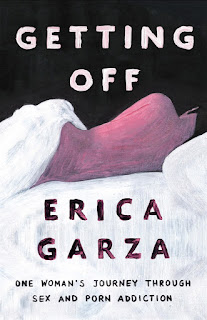
Erica notes that pornography isn’t the cause of sex addiction, noting that, if pornography didn’t exist, people would go to some other source of titillation, like strip clubs and peep shows. She also notes that, even if pornography didn’t exist, she would still have felt the same feelings and desires that had led her to becoming a sex addict.

To those in a similar situation that she was in, Erica recommends that they find someone to talk to, one who can listen from a space of non-judgement. Erica also strongly recommends that they go to a Twelve Steps meeting, where they can meet with like-minded people and talk about their concerns in a safe environment. She also notes that, for some people, a single method, e.g., just Twelve Steps or just yoga or just meditation, might not work, and that a combination of such methods may be needed to reclaim balance in their lives.

Purchase from Amazon: Getting Off: One Woman's Journey Through Sex and Porn Addiction by Erica Garza

Saturday, April 23, 2016

Alina Frank on Wanting Sex Again and Rekindling Passion Using EFT

Alina Frank talks to Alexander “The Engineer” Lim, host of AuthorStory by alvinwriter.com about her book, How to Want Sex Again: Rekindling Passion Using EFT.


If you want to have passion in other areas of your life, then really consider sex as a path to having more passion in your life overall. ~Alina Frank

Alina had been looking for a way to heal herself of a serious illness when she discovered Emotional Freedom Techniques (EFT), which enabled her to get the healing results she so desired. She then became a practitioner, attaining several certifications and working with literally thousands of people all over the world, over the course of twelve years from her home, thanks to the Internet, and it was four or five years into her practice that Alina began focusing on healing people who had challenges with sex and intimacy. She thus became an expert in these areas, something she admits she would have not wanted to do while growing up Catholic.

EFT is a healing modality that is also called “tapping,” as part of this modality involves tapping what are effectively acupuncture points on one’s head and upper body, using fingertips. It is used to remove negative emotions and to remove that which is limiting people in various aspects of their lives. Practitioners and trainers are certified by such organizations as EFT Universe and AAMET.)

Alina intended the book to be read primarily by women who are experiencing challenges with sex and intimacy, although men could also get something from it. She notes that regular sex is good for one’s body, resulting in lower bad cholesterol levels and a younger biological age than one’s chronological age, and she wrote the book to reach more people than she could otherwise do with her practice, as well as to help her settle some of her own issues when it came to communicating with her children regarding talking to them frankly and properly about sex. Alina notes that she wrote the book in such a way that those who aren’t familiar with EFT can work on themselves, and that she had received lots of signals from those around her that she should write a book, which she admits that she greatly resisted.

The book isn’t just for those victims of violent sexual trauma, such as rape and incest, who shy away from intimacy, as Alina notes that most concerns with intimacy have sources outside the bedroom, particularly since women don’t isolate the bedroom from the rest of their lives, which meant that concerns in their lives in these spheres interfere with sex and intimacy. Alina gave the example of her own experience, when she got annoyed by men (not women) interrupting her for whatever reason, and she traced it back to when she was flashed at by men in her younger years, and it was through EFT that she was able to heal herself of this concern.

To those who are experiencing concerns with sex and intimacy, the most important point Alina wants to make is to not buy into the excuses that may be used to explain the lack of desire for such, such as “You’re going through menopause,” as even people in their eighties and nineties can enjoy passionate sex. Alina also remarks that a blockage here could also be representative of blocks in other aspects of people's lives.

Writing the book might have been fun for Alina, but she has been gratified by the response to it, particularly by readers who have told her that it touched them and has changed their lives. She wants to be able to train others for the work that she does and has launched a six-month program called “Reclaiming Intimacy” for women who might want to become trainers themselves.

Alina Frank’s website for her book, How to Want Sex Again: Rekindling Passion Using EFT, is alinafrank.com.

Purchase on Amazon: How to Want Sex Again: Rekindling Passion Using EFT by Alina Frank (EFT Coach)

Sunday, August 16, 2015

Jenny Block on The Ultimate Orgasm for Women

Jenny Block talks to Alexander “The Engineer” Lim, host of AuthorStory by alvinwriter.com about her book, O Wow: Discovering Your Ultimate Orgasm.


“There’s just so much shame connected to women and embracing their sexuality.” ~Jenny Block

Jenny is a retired college professor who taught English for ten years in Richmond, Virginia, and it was after she moved to Dallas, Texas, that she started doing freelance writing. She wrote her first book, Open: Love, Sex and Life in an Open Marriage, which opened new horizons for her in the form of her being invited to write for various other publications, such as the Huffington Post. Although she did some travel writing, her focus in writing was on the topics of sex, positivity, women and women’s advocacy.

Jenny was drawn into womens’ sexuality from her experience with doing research for her first book, as people felt comfortable interacting with her on the topic, and also when she got invitations to write about womens’ sexuality. She decided to write this book when she realized that there were a lot of myths about female orgasm, such as there being fifteen different kinds of female orgasm, and the information presently available to the public isn’t exact. Jenny then did research on the topic, which included surveying 150 women as well as drawing from her own personal experiences, and discovered that there is only one kind of female orgasm that is based on clitoral orgasm, although this can be created in several ways on the female body.

Jenny put all the facts about female orgasm in her book, making it a repository of all that was necessary to know about female orgasms, which she defines as a nervous system reaction that is the height of sexual pleasure, and in women orgasms occur when the clitoris, which has some eight thousand nerve endings compared to virtually none in the vagina, reaches a peak of intensity which slowly decreases, but after which can be re-stimulated to intensity over and over again. Where men are concerned, Jenny recommends that they make sure their female partner feels safe and comfortable with them, take the time to stimulate their female partner properly, and that, for women, it’s all about the clitoris, with intercourse not being the main event. Jenny also advises that men make the woman come first before conducting penetration, as, for women, what is presently called “foreplay” is the main event.

Jenny wrote the book as an easy read, so that anyone can pick it up and understand it easily, and from the feedback that she got it seems that she succeeded. She admits that the hardest thing about writing this book was that, since it was written with women in mind, she would be seen as a militant, man-hating feminist, whereas her entire goal was about creating equality and connection on both sides, and she thus would prefer that husbands and boyfriends likewise read the book. She admits that the process of writing the book has made her realize just how lucky she is in her sexual experiences and how important the subject matter is to women. She also hopes that, by reading her book, people will realize the myths they operated under and understand that women are sexual creatures.

Jenny noted that shame is probably the biggest issue confronting women when it came to women having an orgasm, with its coming in several forms, such as body shame (how womens’ anatomies look) and also shame in how women sound and shame in how they ask for what they want, to the point where women are ashamed to want any pleasure at all (“nice girls don’t need to enjoy sex”), which adversely impacts the event for both male and female partners. She recommends that the focus be taken off the act of intercourse itself and that the definition of sex also include such activities that are presently thought of as foreplay. She also notes that, if all women knew how beautiful they were, free of the sense of shame that women are bombarded with all the time from the environment, the cosmetics industry and glossy magazine company would go out of business very quickly.

Jenny remarks that, for women, there are a lot of other things that come into play where sex and achieving orgasms are concerned, such as connection, intimacy and feeling safe. She also remarks that imagination plays a role in female masturbation, which is the topic of her next book, and that, even in the private thoughts of a lot of women, shame plays a role in inhibiting them sexually. Jenny also suggests committing to taking the time to having an orgasm in the same way one would commit to an exercise regime.

Jenny is interested in exploring topics which lead to connection, not only between men and women but also with each other, as well as making people realize things about themselves and their perspectives. She likes the phrase, “It’s all happening,” as, for her, it means that things are going well, while “moist” is the word that she dislikes. She also wouldn’t mind going back to teaching in college and impacting the students she would steward.

Jenny Block’s website is thejennyblock.com.

GET YOUR COPY: 
Purchase on Amazon: O Wow: Discovering Your Ultimate Orgasm

Also get it here:
O Wow: Discovering Your Ultimate Orgasm
http://goo.gl/KZhBGu

PHOTO CREDIT: Steph Grant of www.stephgrantphotography.com