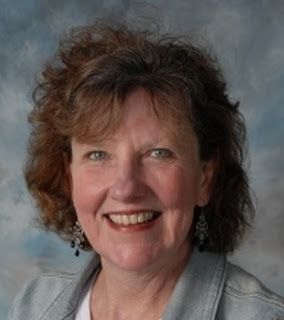
In this interview, Kris Francoeur (a.k.a. Anna Belle Rose) talks to Alexander “The Engineer” Lim, host of AuthorStory by alvinwriter.com, about her book, Of Grief, Garlic and Gratitude: Returning to Hope and Joy from a Shattered Life - Sam’s Love Story.
“Remember the person that you’ve lost, remember what it was that they loved most, and find a way to celebrate that.” ~Kris Francoeur
Kris began writing the material for her book within days of the death of her son, Sam, by posting things online which she was grateful for, as these enabled “the darkness of the grief” to lift somewhat. It was after writing this for a few months that people began saying that her posts on gratitude were resonating with them and helping them look at their own lives. She also received suggestions about her putting these into a book, but it still took around two years before she finally decided to do so.
According to Kris, Sam was a “beacon of light and love,” something which she only fully realized after his death, when Sam’s friends and acquaintances, who had met Sam at some point in their lives, would come over and commiserate with the family. As a child, Sam would want to talk to complete strangers, and even later on, when he struggled with bipolar disorder and addiction, he would see everyone as “worthy of love” and would talk to total strangers. Sam, Kris notes, was “such a character and had such energy” that, after he died, she felt a “gaping hole” with his loss.
Sam began smoking marijuana at the age of 14, initially recreationally, but he soon found that marijuana enabled him to control the extremes of his bipolar disorder condition. This, however, became an outright addiction to prescription drugs and opiates. Kris remarks that Vermont had “absolutely been destroyed” by the opioid epidemic, as the state is a transit area for drugs, to the point where Rolling Stone magazine did a cover story on the issue, and while this issue is endlessly brought up in school, Kris notes that teenagers don’t necessarily listen to what adults say.
Kris notes that the grief she and her family experienced after Sam’s death was different from the kind of grief they had experienced before. She also remarks that grief is a process and that, as a psychologist, she thought she knew what the stages were, in the order she had learned them. She found, however, that the stages of grief are different for parents who lose children compared to when children lose parents or a friend losing a friend, noting that she never experienced anger, at least as of the time of this interview.
(The stages of grief, according to Kubler-Ross, are: Denial, Anger, Bargaining, Depression and Acceptance, in that order.)
Kris remarks that, at present, the sadness she feels from Sam’s loss is akin to a callous on one’s foot, in that she has learned to “walk with it.” One of the hardest lessons she had to learn was that she would always miss Sam for the rest of her life, remarking that, at Sam’s service, a woman whom she had known for forty years, and whose son had also died of an opioid overdose some fifteen years previously, hugged her and told her that “it doesn’t get better; it gets different.” The woman’s remark initially angered Kris, but Kris realized that the woman was telling her the truth. For Kris, learning to live with Sam’s death is a part of her life.
Kris acknowledges that her family isn’t religious and also didn’t want to travel such paths as drinking or taking medication or illegal drugs. Each member of the family went through grief in their own ways, and what was consistent for all of them was being with nature as much as possible, to “do a Sam” by holding true to the things that Sam loved, such as listening to music, being outdoors and being with people. The latter posed a bit of a challenge for Kris and her husband, as they are introverts, but they did so anyway, reaching out to people they didn’t know in the same way Sam used to.
Kris notes that it is easy to think that “everything is bad” whenever something bad - such as the loss of a job or an accident - happens, which colors everything that one then sees and would complain about. Kris admits that it was easy to view the world through this filter after Sam’s death, and she used to recognize, every day, the wonderful gifts that she had received, and then post online the things that she was grateful for. This helped her out greatly, particularly during the first year after Sam’s death, as she would feel peace and love - something that helped her realize that the world wasn’t the horrible place that she could so easily see it to be. Kris points out that, as she has traveled the path of “conscious and deliberate gratitude,” she has learned that being grateful for at least 30 days changes the brain’s chemistry, and can even show as much benefit as antidepressants. She remarks that her heart rate, when she writes about things she is grateful for, is the same as that when she meditates.
Community does play a part in dealing with grief, according to Kris, and she points out that this isn’t commonly the case with other families who have suffered the loss of a member who died from an opioid overdose, as the most common reaction is that other people don’t want to hear about it. Kris admits that the outlook of what Sam’s friends had on such things as energy, life, death and the universe were beyond what hers was, and that they “wrapped around” Kris and her family, showing them how much, to this day, they love Sam and his family. This openness, acceptance and acknowledgement of grief is also what enables Kris and her family to come to terms with grief and manage it in their lives.
To those who are grieving, Kris advises that everyone grieves differently, and so long as one doesn’t harm oneself, the way one grieves isn’t wrong. She also advises that those in grief record their stories, as doing so is a good way to learn about oneself.
Purchase from Amazon: Of Grief, Garlic and Gratitude: Returning to Hope and Joy from a Shattered Life?Sam’s Love Story by Kris Francoeur
Showing posts with label Son. Show all posts
Sunday, June 23, 2019
Kris Francoeur on Grief, Garlic and Gratitude and Returning to Hope and Joy from a Shattered Life - Sam's Love Story
Labels:
alvinwriter.com,
author interview,
AuthorStory,
being an author,
books,
Garlic and Gratitude,
Hope,
inspiring story,
Joy,
Kris Francoeur,
Life,
Loss,
Love,
Moving On,
Of Grief,
Sam,
Shattered,
Son,
writing inspiration
Friday, March 9, 2018
Kate Genovese on the Story of Her Athlete Son and His Own Prison of Addiction
In this interview, Kate Genovese talks to Alexander “The Engineer” Lim, host of AuthorStory by alvinwriter.com about her book, Hat Tricks From Heaven: The Story of an Athlete in His Own Prison of Addiction.
“If you have the ability to get them help, get it, because you may not have another chance.” ~Kate Genovese
Kate has been a nurse for thirty years, and she wrote Hat Tricks From Heaven as a way to help her recover from her grief after the death of her son Geno, who is the person and whose addiction is what the book is all about. She got the title from a hockey term, where a player gets three goals in a game, after which hats are traditionally thrown onto the ice, as such is considered an achievement to note. She might have originally written it to heal, but as she wrote it she realized that it could help out others who are addicted or who know someone who is addicted.
According to Kate, Geno was a charming person who was always happy and who was always wanting to do something fun. He was also sensitive, good at explaining things, athletic, smart, handsome, almost “an empath,” and always willing to help others out, which came naturally. That said, he also had a temper and, as Kate noted in her book, had addictive tendencies even as a child. As a child, he wanted to get into the NHL, and during his days playing both hockey and football got injured, which required medical treatment.
Geno was prescribed percocet when he suffered a knee injury during ninth grade, but Kate and her husband didn’t start to twig on Geno’s addiction until he was seventeen, when, after he was supposed to be fully recovered from shoulder surgery, he insisted on seeing a doctor to prescribe him pain medication. As a nurse, Kate was surprised when the doctor agreed with Geno and prescribed percocet, and while she had misgivings, Kate went along with what the doctor advised. Kate, however, took the precaution of giving the percocet to the school nurse with instructions that she be the one to give it to Geno, which was something that angered Geno so greatly that Kate realized that something was likely going on.
Kate and her husband attempted to keep an eye on Geno after he went to college and moved out, and when Kate asked how he was doing a few times after he played a hockey game she noticed that the pupils of his eyes were constricted to the point of being as thin as a pin was wide - a symptom of having taken narcotics - and that his eyes were somewhat bloodshot. Kate remarked that Geno was taking too many painkillers, but Geno said that he would stop taking painkillers when he stopped playing hockey.
Geno then got a good job and had a steady girlfriend whom he was considering marrying, but at the age of twenty-five Geno called up Kate, who was making less money than he was, for money for his rent. Kate said that Geno said that he had gambling debts - which seemed legitimate, since Kate knew that Geno was addicted to gambling - but it was only around two years after that when Geno’s roommate called her up and said that he and Geno were addicted. The roommate then mentioned that Geno owed him $2,000 and that he, himself, would be going into rehabilitation in California, and while she was somewhat doubtful about the news, as she didn’t know the roommate at all, her husband went to where Geno was, picked him up and brought him home.
Geno might have admitted that he had an addiction and that he needed help, and while he did attempt to go at it alone, through Narcotics Anonymous and counseling, within two weeks’ time, he started getting high again, going to friends’ houses whenever his parents confronted him. Kate then noted that that became the pattern, and along the way Geno lost his girlfriend and his job, when he got into an accident with the company car. Kate and her husband were at a loss, as Geno was almost thirty by that time, with Kate telling Geno that she loved him and hated the disease. Geno only got some restrictions on himself only after he got into trouble with the law, but he eventually overdosed and died from it.
According to Kate, a large change in personality is an obvious symptom of someone who is addicted, stating, as examples, that Geno didn’t care what he looked like and when he once punched the door of his room angrily because he wanted to start a fight, as he apparently couldn’t get the drugs he wanted. Kate mentioned that, for parents, it is okay to check their child’s room while the latter are still living with them, as she remarked that she was likely to have found paraphernalia early on, while Geno hadn’t yet moved out.
Kate recommends that peers who know a peer who might be doing drugs go to the parents or the school guidance counselor or teacher with his concerns. She says that the addicted person should not be left alone, particularly since teenagers don’t realize that, once they are dead, they are dead. For parents, Kate points out that, if the child is not yet of legal age, they can force the child to go into rehab, and she acknowledged that parents who are looking after an addicted child who is of legal age was a lot more difficult. Kate mentioned that she went to Al-Anon meetings, which were support groups for the families and friends of addicts, while her husband had a lot of heart-to-heart talks with Geno - something which Kate remarked was pointless, as addicts only sit around and wait for one to get done before going out for their next fix.
Where the doctor was concerned, Kate said that he should have just said that Geno didn’t need it anymore, and mentioned that laws are presently being discussed to prevent doctors from issuing drugs unnecessarily. Where those in the legal system are concerned, Kate remarks that they need to realize that addiction is a disease which jail time wouldn’t help. Kate remarked that the judge should have put Geno in rehab for thirty days, after which the discussion about what legal consequences he faced would be conducted, so that Geno’s head would, at least, be clear by that time.
When all is said and done, where the book is concerned, Kate wants to have a “sober house” built to house addicts and to help them come to terms with their addiction. She emphasizes that addiction is a disease as it does change the addict’s brain chemistry and structure, and that recovery is possible. Kate notes that Al-Anon is a good place for those who are family and friends of addicts, and that different hospitals hold similar meetings, as there is a lot of stress related where dealing with addicts is concerned. She remarked that exercise helps, and that running and yoga helped her out greatly.
Purchase from Amazon: Hat Tricks From Heaven: The Story of an Athlete in His Own Prison of Addiction by Kate Genovese
“If you have the ability to get them help, get it, because you may not have another chance.” ~Kate Genovese
Kate has been a nurse for thirty years, and she wrote Hat Tricks From Heaven as a way to help her recover from her grief after the death of her son Geno, who is the person and whose addiction is what the book is all about. She got the title from a hockey term, where a player gets three goals in a game, after which hats are traditionally thrown onto the ice, as such is considered an achievement to note. She might have originally written it to heal, but as she wrote it she realized that it could help out others who are addicted or who know someone who is addicted.
According to Kate, Geno was a charming person who was always happy and who was always wanting to do something fun. He was also sensitive, good at explaining things, athletic, smart, handsome, almost “an empath,” and always willing to help others out, which came naturally. That said, he also had a temper and, as Kate noted in her book, had addictive tendencies even as a child. As a child, he wanted to get into the NHL, and during his days playing both hockey and football got injured, which required medical treatment.
Geno was prescribed percocet when he suffered a knee injury during ninth grade, but Kate and her husband didn’t start to twig on Geno’s addiction until he was seventeen, when, after he was supposed to be fully recovered from shoulder surgery, he insisted on seeing a doctor to prescribe him pain medication. As a nurse, Kate was surprised when the doctor agreed with Geno and prescribed percocet, and while she had misgivings, Kate went along with what the doctor advised. Kate, however, took the precaution of giving the percocet to the school nurse with instructions that she be the one to give it to Geno, which was something that angered Geno so greatly that Kate realized that something was likely going on.
Kate and her husband attempted to keep an eye on Geno after he went to college and moved out, and when Kate asked how he was doing a few times after he played a hockey game she noticed that the pupils of his eyes were constricted to the point of being as thin as a pin was wide - a symptom of having taken narcotics - and that his eyes were somewhat bloodshot. Kate remarked that Geno was taking too many painkillers, but Geno said that he would stop taking painkillers when he stopped playing hockey.
Geno then got a good job and had a steady girlfriend whom he was considering marrying, but at the age of twenty-five Geno called up Kate, who was making less money than he was, for money for his rent. Kate said that Geno said that he had gambling debts - which seemed legitimate, since Kate knew that Geno was addicted to gambling - but it was only around two years after that when Geno’s roommate called her up and said that he and Geno were addicted. The roommate then mentioned that Geno owed him $2,000 and that he, himself, would be going into rehabilitation in California, and while she was somewhat doubtful about the news, as she didn’t know the roommate at all, her husband went to where Geno was, picked him up and brought him home.
Geno might have admitted that he had an addiction and that he needed help, and while he did attempt to go at it alone, through Narcotics Anonymous and counseling, within two weeks’ time, he started getting high again, going to friends’ houses whenever his parents confronted him. Kate then noted that that became the pattern, and along the way Geno lost his girlfriend and his job, when he got into an accident with the company car. Kate and her husband were at a loss, as Geno was almost thirty by that time, with Kate telling Geno that she loved him and hated the disease. Geno only got some restrictions on himself only after he got into trouble with the law, but he eventually overdosed and died from it.
According to Kate, a large change in personality is an obvious symptom of someone who is addicted, stating, as examples, that Geno didn’t care what he looked like and when he once punched the door of his room angrily because he wanted to start a fight, as he apparently couldn’t get the drugs he wanted. Kate mentioned that, for parents, it is okay to check their child’s room while the latter are still living with them, as she remarked that she was likely to have found paraphernalia early on, while Geno hadn’t yet moved out.
Kate recommends that peers who know a peer who might be doing drugs go to the parents or the school guidance counselor or teacher with his concerns. She says that the addicted person should not be left alone, particularly since teenagers don’t realize that, once they are dead, they are dead. For parents, Kate points out that, if the child is not yet of legal age, they can force the child to go into rehab, and she acknowledged that parents who are looking after an addicted child who is of legal age was a lot more difficult. Kate mentioned that she went to Al-Anon meetings, which were support groups for the families and friends of addicts, while her husband had a lot of heart-to-heart talks with Geno - something which Kate remarked was pointless, as addicts only sit around and wait for one to get done before going out for their next fix.
Where the doctor was concerned, Kate said that he should have just said that Geno didn’t need it anymore, and mentioned that laws are presently being discussed to prevent doctors from issuing drugs unnecessarily. Where those in the legal system are concerned, Kate remarks that they need to realize that addiction is a disease which jail time wouldn’t help. Kate remarked that the judge should have put Geno in rehab for thirty days, after which the discussion about what legal consequences he faced would be conducted, so that Geno’s head would, at least, be clear by that time.
When all is said and done, where the book is concerned, Kate wants to have a “sober house” built to house addicts and to help them come to terms with their addiction. She emphasizes that addiction is a disease as it does change the addict’s brain chemistry and structure, and that recovery is possible. Kate notes that Al-Anon is a good place for those who are family and friends of addicts, and that different hospitals hold similar meetings, as there is a lot of stress related where dealing with addicts is concerned. She remarked that exercise helps, and that running and yoga helped her out greatly.
Purchase from Amazon: Hat Tricks From Heaven: The Story of an Athlete in His Own Prison of Addiction by Kate Genovese
Subscribe to:
Posts (Atom)